Six Foundational Principles
The Constitution is built on six basic principles. These are deeply ingrained in the mindset and landscape of the US Government.
- Popular Sovereignty—This principle states that the source of governmental power lies with the people. This belief stems from the concept of the social contract and the idea that government should be for the benefit of its citizens. If the government is not protecting the people, it should be dissolved.
- Limited Government—Since the people give the government its power, the government itself is limited to the power given to it by them. In other words, the US government does not derive its power from itself. It must follow its own laws and it can only act using powers given to it by the people.
- Separation of Powers—bAs stated previously, the US Government is divided into three branches so that no one branch has all the power. Each branch has its own purpose: to make the laws, execute the laws, and interpret the laws.
- Checks and Balances—In order to further protect the citizens, the constitution set up a system of checks and balances. Basically, each branch of government has a certain number of checks it can use to ensure the other branches do not become too powerful. For example, the president can veto legislation, the Supreme Court can declare acts of Congress unconstitutional, and the Senate must approve treaties and presidential appointments.
- Judicial Review—This is a power that allows the Supreme Court to decide whether acts and laws are unconstitutional. This was established with Marbury v. Madison in 1803.
- Federalism—One of the most complicated foundations of the US is the principle of federalism. This is the idea that the central government does not control all the power in the nation. States also have powers reserved to them. This division of powers does overlap and sometimes leads to problems such as what happened with the response to Hurricane Katrina between the state and federal governments.
Political Process
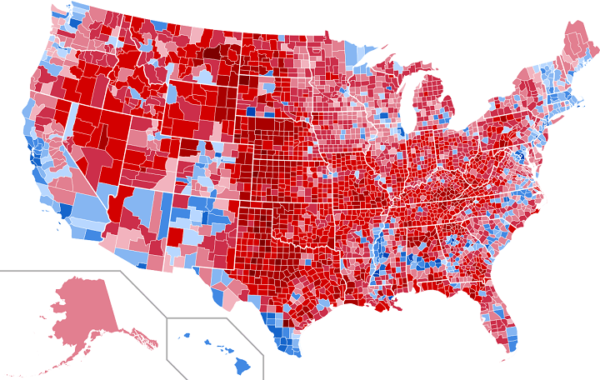
While the Constitution sets up the system of government, the actual way in which the offices of Congress and the Presidency are filled are based upon the American political system. Many countries have numerous political parties—groups of people who join together to try and win political office and thereby control the government—but the US exists under a two-party system. The two major parties in America are the Democratic and Republican parties. They act as coalitions and attempt to win elections. We currently have a two-party system because of not only historical precedent and tradition but also the electoral system itself.
The fact that America has a two-party system does not mean that there is no role for third parties in the American landscape. In fact, they have often swayed elections even if their candidates have in most cases not won.
Lobbyists and Political Action Committees (PACs)
Without specific representation in multiple political parties, special interest groups must find alternative methods of getting their voices heard in the legislative process. Many companies and other groups hire professional lobbyists to advocate for their causes.
A lobbyist is someone paid to influence government agencies, legislators, and legislation to the best interests of their clients. Lobbyists may even write the legislation that the legislator presents to a committee or the legislature. Lobbyists represent nearly all industries and interests, including insurance, auto manufacturing, tobacco, environment, women, minorities, education, technology, textiles, farming, and many others. Lobbyists, who are sually lawyers, are often former members of the legislature or have held other government positions.
Companies and interest groups hire them because of their influence and access from their former jobs. For example, after spending decades as a Senator from Oregon and leaving office in disgrace over misconduct, Bob Packwood returned to Washington, D.C. as a paid lobbyist for business interests in the Pacific Northwest.
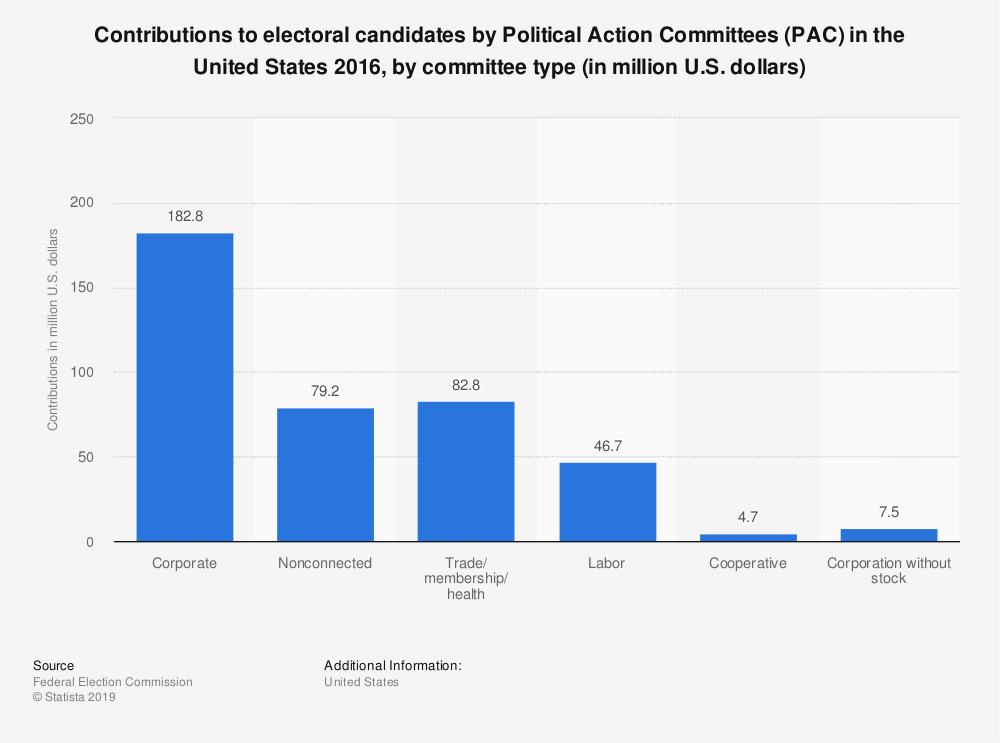
Political Action Committees, or PACs, are special interest groups that raise money to support and influence specific candidates or political parties. These groups may take an interest in economic or social issues, and include groups as diverse as the American Medical Association, the Trial Lawyers Association, the National Education Association, and the National Rifle Association. In recent years these groups have proved to be powerful and wealthy forces in elections. They often possess more money than the candidates and can run advertising campaigns that support or oppose the viewpoints or actions of a candidate running for office. They may also heavily influence state or local campaigns for ballot measures. PACs bear much of the responsibility for drastic increases in campaign spending in recent years. Many groups and officials are now calling for restrictions on such spending to limit PAC influence and maintain a balance of power among all interested constituencies.
The Pluralist and Power-Elite Models of politics
Sociologists recognize two main models when analyzing political structures, particularly in the United States:
- The Pluralist Model argues that power is dispersed throughout many competing interest groups and that politics is about negotiation. One gains success in this model through forging alliances, and no one group always gets its own way.
- The Power‐Elite Model argues the reverse, claiming that power rests in the hands of the wealthy—particularly business, government, and the military. These theorists claim that, because power is so heavily concentrated in a few at the top, the average person cannot be heard. In addition, they say that the competitors who are claimed to work as balances simply do not exist.
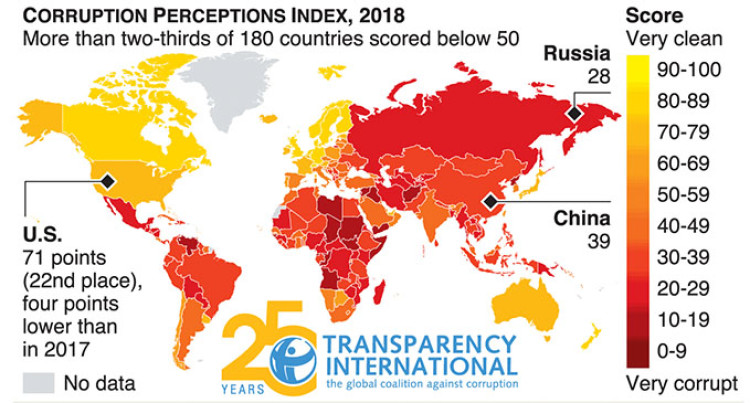
The United States has dropped out of being one of the top 20 least corrupt countries in the world, according to an annual global corruption report released Tuesday by Transparency International. The Corruption Perceptions Index 2018 put the U.S. at number 22 – the worst ranking since 2011 and a drop from 16 in the 2017 report – right before France and just ahead of the United Arab Emirates. The watchdog group analyzes countries on a 100-point scale, drawing from more than a dozen surveys of businesspeople and expert assessments to measure public sector corruption. Zoe Reiter, Transparency international’s acting spokesperson in the U.S., pointed the finger at the Trump presidency as a significant reason behind America's declining performance, highlighting “his lack of transparency regarding his assets, as well as his repeated attempts to undermine the Mueller investigations and attacks on the press.
Police
It is unlikely for businesses to encounter corruption in the US police. The country performs well in relation to the reliability of police services to protect companies from crime (GCR 2017-2018). A fifth of Americans surveyed perceive the police as highly corrupt; among African-Americans one in three shares this view (GCB 2017).
Public Services
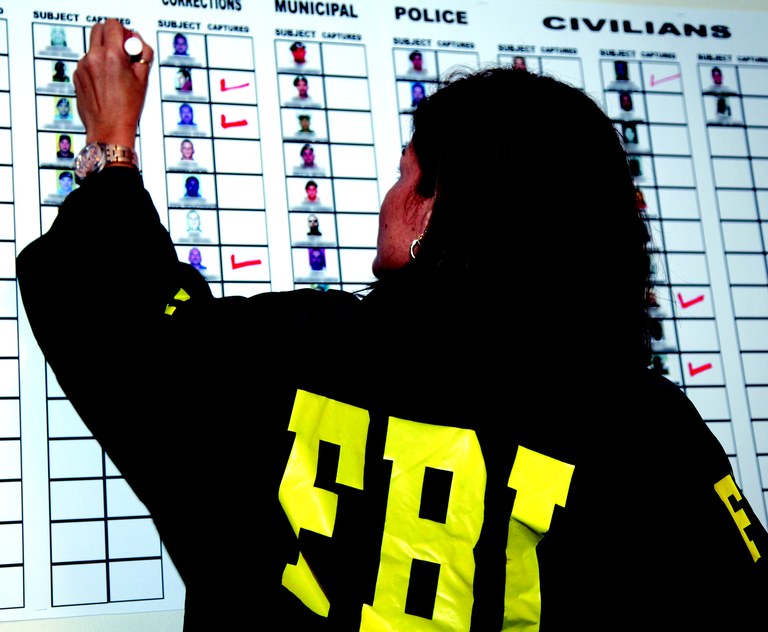
Corruption risks when interacting with public services are moderate. Businesses indicate that bribes and irregular payments are uncommon when interacting with public services (GCR 2015-2016). Nevertheless, Americans express high anxiety about government corruption; corrupt public administration officials were cited as the single biggest fear in a survey asking Americans about their fears (Chapman Uni 2016). About a quarter of Americans believe their local government officials are corrupt (GCB 2017). There is a little arbitrary exercise of authority in the United States (SGI 2017). The transparency of the policy-making process is rated by businesses as among the best in the world (GCR 2017-2018). The US has among the most competitive regulatory environments in the world and remains the biggest recipient of foreign direct investment (DB 2018, UNCTAD 2017). Accordingly, companies rank the burden of government regulation among the lowest in the world (GCR 2017-2018). Companies should be aware that the regulatory environment differs significantly from state to state.
Starting a business takes a step more than the OECD high-income average, and the time required, depending on the local jurisdiction, is either shorter or in line with the OECD high-income average (DB 2018).ld other government positions.
Sources
US falls in global corruption ranking report; Somalia and Syria are worst offenders