Student Loans Debts
Americans now owe more than $1.53 trillion in student loan debt, based on the most current figures available to Nitro. That money is not only owed by young people fresh out of college, but also by borrowers who have been out of school for a decade or more. The standard repayment timetable for federal loans is 10 years, but research suggests it actually takes four-year degree holders an average of 19.7 years to pay off their loans.
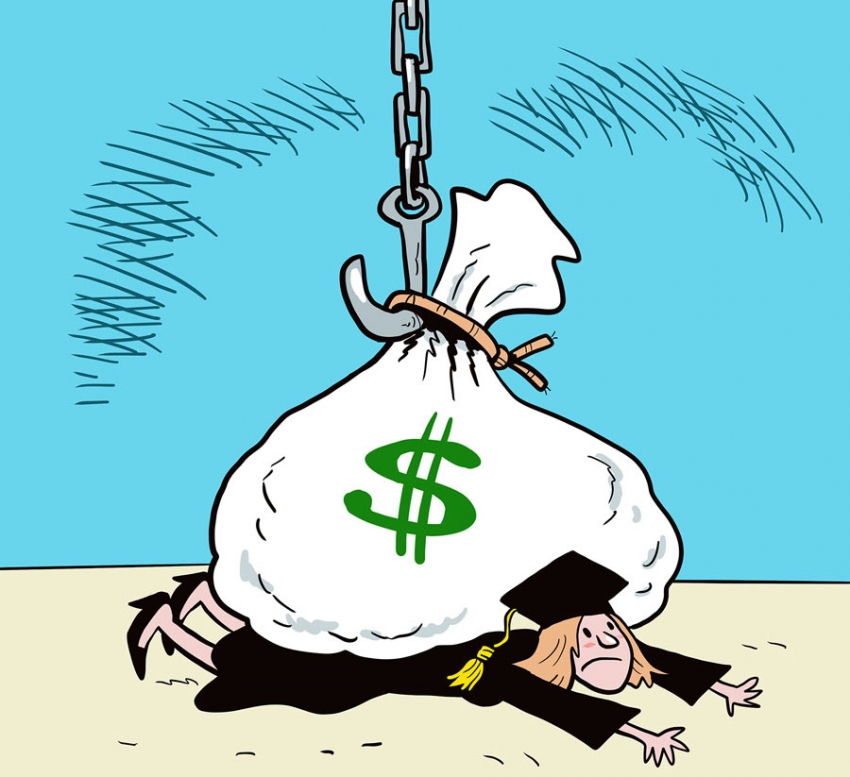
Student loan debt has ballooned in the past few decades, primarily because the costs associated with higher education – tuition, fees, housing, and books – have grown much faster than family incomes. The College Board has tracked costs at public and private universities since 1971. When the organization first started monitoring prices, the average cost of one year at a public university was $1,410 ($8,730 in 2017 dollars). That was 15.6% of the median household income of $9,027 and manageable for many families without going into debt.
Fast forward to 2018, and the picture is very different. Today, the average cost of one year at a public university is $21,370, which is 34.8% of the median household income of $61,372. That could be why more than 70% of bachelor’s degree recipients emerge from college today with substantial student loan debt, and why many find themselves in need of loan consolidation and refinancing. The average monthly student loan payment was $393 in 2016 (the latest data available), which is like buying the newest Apple Watch every two months. That puts the average monthly payment nearly 55% higher than it was a decade ago.
Student loan payments have increased more than two-and-a-half times faster than the rate of inflation. If the typical $227 monthly bill student loan borrowers received in 2005 had kept pace with consumer prices, the cost would only have risen by 22.9% to $279. Paying off student loans is significantly more challenging today than it was in the past, but there are strategies borrowers can use to cut their interest rates and lower their monthly payments.
The average monthly student loan payment was $393 in 2016 (the latest data available), which is like buying the newest Apple Watch every two months. That puts the average monthly payment nearly 55% higher than it was a decade ago.
Student loan payments have increased more than two-and-a-half times faster than the rate of inflation. If the typical $227 monthly bill student loan borrowers received in 2005 had kept pace with consumer prices, the cost would only have risen by 22.9% to $279. Paying off student loans is significantly more challenging today than it was in the past, but there are strategies borrowers can use to cut their interest rates and lower their monthly payments.
Federal vs. Private Student Loans
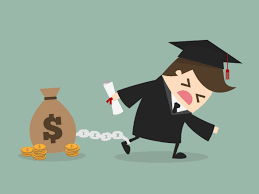
The overwhelming majority of outstanding student loan debt is owed to the federal government. The remaining 19% is owed to private banks. Historically, federal loans were the first stop for most students because they were relatively easy to get and carried reasonable interest rates. However, as market conditions have shifted from the early 1990s until today, so have the interest rates on federal student loans. In recent years, new competition among private lenders has led to more options and better customer service. Especially after graduation, many students find they can get a better deal by refinancing federal loans with private lenders.
Over three-quarters of all federal loans are direct loans. They are provided directly by the U.S. Department of Education and are available to most students regardless of financial need. Federal Family Education Loans (FFEL) are indirect loans, provided by accredited institutions but guaranteed by the government.
Perkins Loans are need-based loans of up to $5,500 a year for undergraduate students with very low household incomes; they are issued directly by the universities. Federal loans are among the easiest for students to get, but most have low annual limits, and interest rates can be high. Graduates with multiple federal loans can turn to consolidation to streamline their finances and lock in lower interest rates.
Which Are the Most-Educated States?
Levels of educational attainment vary widely across the country. The states with the most bachelor’s degree recipients age 25 or older are
- Massachusetts (41.2%)
- Maryland (38.4%)
- Colorado (38.7%)
- Connecticut (38.0%)
The states with the fewest bachelor’s degree holders are
- West Virginia (19.6%)
- Mississippi (21.0%)
- Arkansas (21.5%)
- Connecticut (38.0%)
- Kentucky (22.7%).
It’s expensive, but Americans are still pursuing graduate and professional degrees – and the majority are doing so as full-time students. Of the1.84 million students enrolled in public or private not-for-profit graduate programs in fall 2016, 57.4% were registered full time. Graduate students are also now more likely to be women than men.
Although law and medicine draw many young people to graduate school, aspiring doctors make up just 5% of grad students and potential lawyers another 4%. Among master’s programs, the most sought-after degrees are science (18%), education (16%), and business administration (11%). About a quarter of graduate students are aiming for a doctorate, with 23% trying to earn a Ph.D. Of all graduate degrees, a medical degree takes longest to earn and costs the most. Doctors emerge from their training with an average debt load of $161,772. Lawyers follow with $140,616 worth of student loans, and educators rack up an average of $50,879 in outstanding loans. Of all degree seekers, the least indebted after graduation tend to be those earning MBAs, with an average student loan debt of $42,000.
College Sticker Price
If colleges and universities cost less than their sticker prices for the majority of students, why don’t they just reduce the sticker price? National Public Radio (NPR) looked for the answer to this question and found several reasons.
The first and most intuitive reason: college is worth whatever you’re willing to pay. While many students can’t afford the full sticker price or don’t want to spend that much on higher education, other students and their families are completely willing and able to pay full price. From an institution’s standpoint, it would be imprudent to accept less when a student would pay more.
Students who are unwilling or unable to pay full price. Revenue made from students who pay the full cost can be used to provide scholarships and aid to other qualifying students. The final reason is less intuitive for most people. NPR reported that prospective students and their families – just like consumers at any retail store – like to feel like they’re getting a good deal. Colleges don’t mind that their advertised prices are high because it shows a higher value and, for most students, a better deal when tuition is marked down. Whether students pay full price or receive generous scholarships, experts agree that college is almost always worth the investment.
Sources:


