National Debt
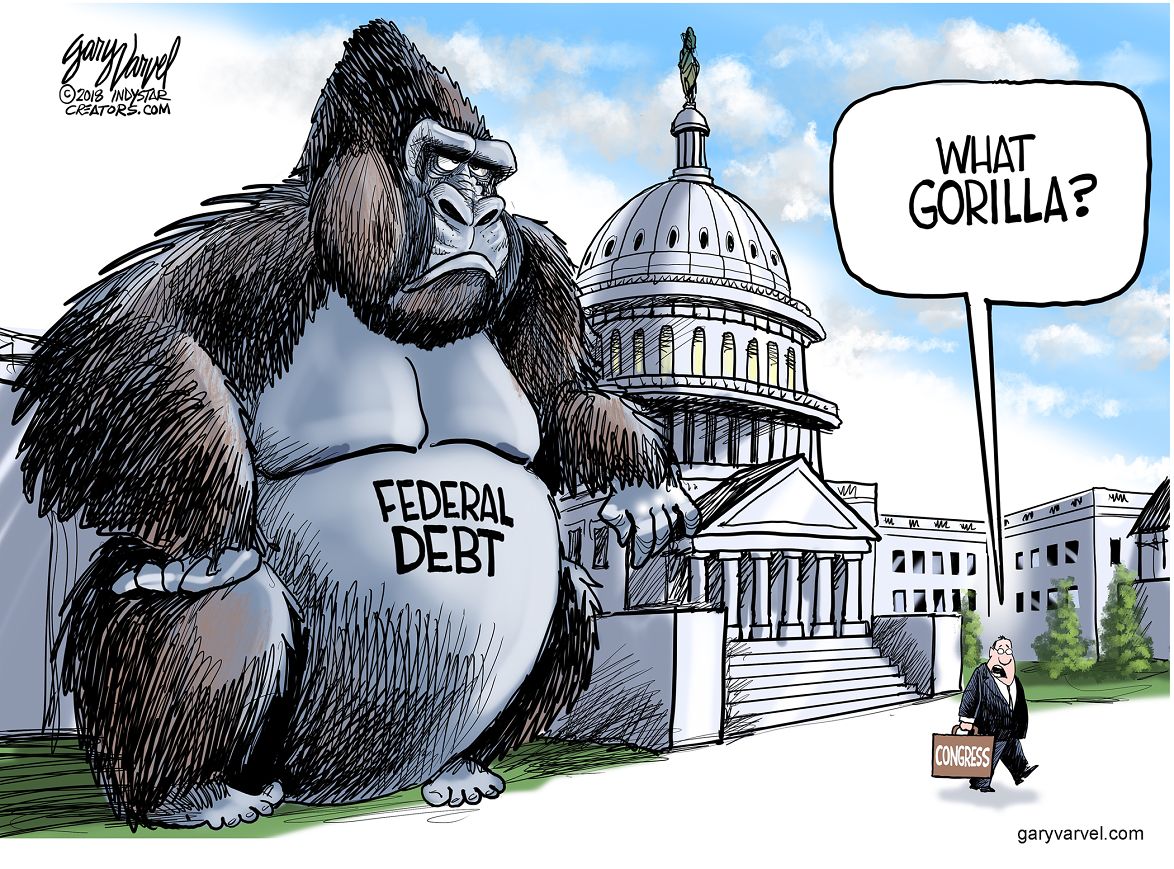
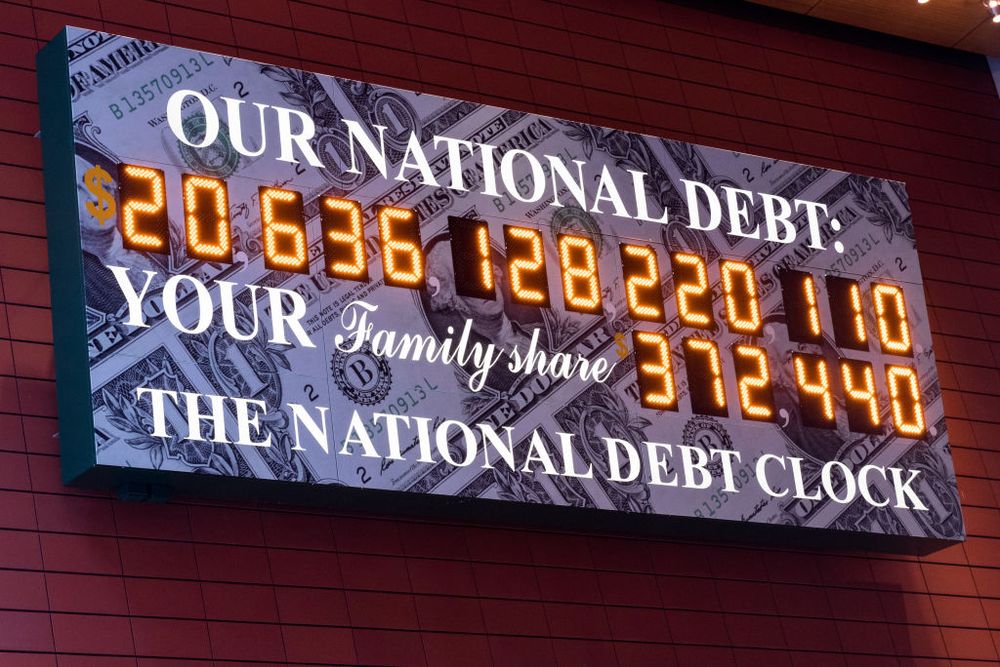
The federal government’s total debt stands at $22.023 trillion as of the end of June, according to the Treasury Department’s monthly reckoning. Of this amount, nearly $22 trillion is subject to the statutory debt ceiling, leaving just $25 million in unused debt capacity.
The nation’s debt is now bigger than its gross domestic product, which was an estimated $21.06 trillion in the first quarter of 2019. Debt as a share of GDP grew throughout the 1980s and early 1990s, then leveled off before rising steeply during and after the 2008 financial crisis. The overall debt load has just about equaled or exceeded GDP since late 2012, which had not previously been the case since the end of World War II.
Though U.S. government debt is perhaps the most widely held class of security in the world, 26.5% of the debt (about $5.83 trillion) is owed to another arm of the federal government itself as of the end of June. The single biggest creditor, in fact, is Social Security: The program’s retirement and disability trust funds together held more than $2.9 trillion in special non-traded Treasury securities, or 13.3% of the total debt. (Social Security revenues exceeded benefit payments for many years; the surplus was required by law to be invested in Treasuries.) Another big holder is the Federal Reserve system, which as of mid-July collectively held nearly $2.1 trillion worth of Treasuries, or 9.5% of the total debt. (The Fed’s holdings are included in the “debt held by public” category.)
A Brief History of U.S. Debt
Debt has been a part of this country's operations since its beginning. The U.S. government first found itself in debt in 1790, following the Revolutionary War. Since then, the debt has been fueled over the centuries by more war, economic recession, and inflation. (Periods of deflation may nominally decrease the size of the debt, but they increase the real value of debt. Since the money supply is tightened, money is valued more highly during deflationary periods; so even if debt payments remain unchanged, borrowers are actually paying more).
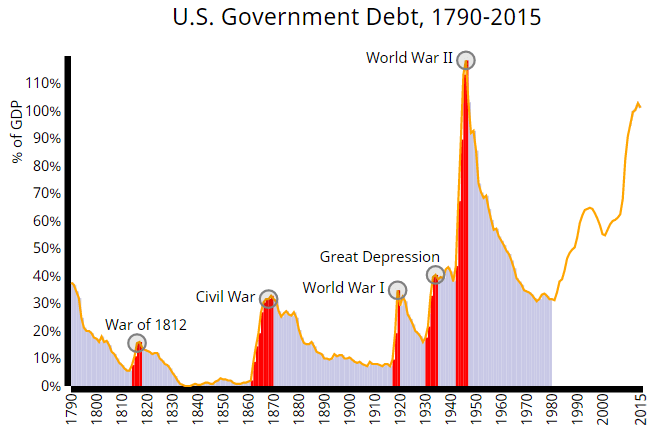
In modern times, the government has struggled to spend less than it takes in for over 60 years, making balanced budgets nearly impossible. Levels of the national debt spiked significantly during President Ronald Reagan's tenure, and subsequent presidents have continued this upward trend. The treasury direct website indicates that over the last two decades, the U.S. national debt has consistently increased (see chart). Only briefly during the heyday of the economic markets and the Clinton administration in the late 1990s has the U.S. seen debt levels trend down in a material manner.
Political disagreements about the impact of national debt and methods of debt reduction have historically led to many gridlocks in Congress and delays in the budget proposal, approval, and appropriation. Whenever the debt limit is maxed out by spending and interest obligations, the president must ask Congress to increase it. For example, in September 2013 the debt ceiling was $16.699 trillion, and the government briefly shut down over disagreements on raising the limit.
How Bad is the National Debt
Economists and policy analysts disagree about the consequences of carrying federal debt. Certain aspects are agreed upon, however. Governments that run fiscal deficits have to make up the difference by borrowing money, which crowds out capital investment in private markets. Debt securities issued by governments to service their debts have an effect on interest rates; this is one of the key relationships that is manipulated through the Federal Reserve's monetary policy tools.
Keynesian macroeconomists believe that it can be beneficial to run a current accounts deficit in order to boost aggregate demand in the economy. Most neo-Keynesians support fiscal policy tools such as government deficit spending only after the monetary policy has proven ineffective and nominal interest rates have hit zero. Chicago and Austrian school economists argue that government deficits and debt hurt private investment, manipulate interest rates and the capital structure, suppress exports, and unfairly harm future generations either through higher taxes or inflation.
What Makes the Debt Worse?
History tells us that among the top expenses, the Social Security program, defense, and Medicare were the primary expenses even during the times when the national debt levels were low, as they last were in the 1990s. Then how did the situation worsen? There are various opinions on the matter:
The Overburdened Social Security System
Some argue that the mechanism to engage in financing the Social Security system has led to increased expenditures without obvious payoff. Payments are collected from present-day workers and used for immediate benefits — that is, payments to existing beneficiaries. Due to the increasing number of retirees and their longer life spans, the size and cost of payments have skyrocketed. Parents having fewer kids are limiting the pool of present-day contributing workers. Recent economic downturns have also led to stagnant pay. Overall, limited incoming and outgoing cash flows are making Social Security a big component of the national debt.

Continuing Tax Cuts
Originally introduced during the George W. Bush administration, tax cuts continue to add to the burden. That affect was heightened by the passage of President Trump's Tax Cuts and Jobs Act in 2017, which cut both corporate and individual taxes.
Wars in Iraq, Syria, Pakistan, and Afghanistan
Primarily within the defense budget, continued involvement in these engagements has cost the U.S. massively, adding to national debt. Around $5.9 trillion has been spent on these engagements since 2001, according to a study from the Watson Institute at Brown University.
The Bottom Line
As the national debt continues to grow, the question remains: Is it OK to run a deficit like we have for many years, or do we need to balance the budget? Just like any average American household, overspending can continue for extended periods by rolling over debt and borrowing more and more money in what seems like a never-ending game of chasing our tail.
Yet without its spending, some would say our economy could be in much worse shape–keeping the Keynesian theories alive that it’s our government’s responsibility to step in when needed. When debt is handled appropriately, it can be used to foster long-term growth and prosperity. But high levels of national debt for prolonged periods of time has a severe impact on the overall economy. As the U.S. national debt clock keeps ticking:
- Higher interest will have to be paid on government debt.
- Higher debt levels will mean limited jobs and lower salaries.
- Increases in interest rates will cause borrowing to become difficult at all levels, including those for individuals/corporations/mortgages.
- Operating in the U.S. will be viewed as riskier in the eyes of the world, undermining continued foreign investor confidence and investments in the U.S.
- The risk of the country defaulting on its own debt obligation may lead to further downgrades.
Sources
Design copyright © 2019 Talia Syed
Information from indicated sources


