Phones in the Workplace
One data point from the analytics firm Flurry found that U.S. users are spending more than five hours per day using their smartphones and that the time spent using mobile apps increased 69% in a single year (from 2015 to 2016).
Tests requiring full attention were given to study participants. They were instructed to set phones to "silent." Some kept their phone near them, and others were asked to move their phone to another room. Those with the phone in another room "significantly outperformed" others on the tests.

The more dependent people are on their phones, the stronger the distraction effect, according to the research. The reason is that smartphones occupy in our lives what's called a "privileged attentional space" similar to the sound of our own names. (Imagine how distracted you'd be if someone within earshot is talking about you and referring to you by name - that's what smartphones do to our attention.)
So while a silent or even turned-off phone distracts as much as a beeping or ringing one, it also turns out that a smartphone making notification alert noises or vibrations is as distracting as actually picking it up and using it, according to a study by Florida State University. Even short notification alerts "can prompt task-irrelevant thoughts, or mind-wandering, which has been shown to damage task performance."
Solution
The only solution is training, education and better management:
Enterprises must add regular training about the costs of smartphone distraction. The impulse to escape into social interaction can be partially re-directed into company collaboration tools selected for their ability to engage employees
Source:
Phones in School
According to a recent study that found the mere presence of a smartphone reduces a person’s ability to focus. In the study, undergraduates asked to leave their phones in another room did better on cognitive tests than those who were asked to silence their phones and leave them face down on their desk or in a bag.

Many adults and kids share the idea that when we are texting or monitoring feeds while we work we are still being productive — we are able to juggle everything at once. But neuropsychologists aren’t optimistic about how productive multitasking really is. “Having multiple sources of technology at your fingertips and available at all times probably is almost a guarantee of a reduction in performance and productivity,” says Dr. Cruger.
“Resumption lag” is the period of time between when you were interrupted from a task and when you resume it.
Solution
Setting up a homework routine that minimizes distractions is important, especially if your child struggles with attention, or seems to be finding that her homework is taking much longer than it should.
Source:
Phones While Driving
Cell phone use while driving statistics and texting and driving facts show that this behavior is common and dangerous for teen drivers. According to the National Safety Council, 1.2 million car crashes in 2013 involved drivers talking on the phone, and at least 341,000 involved text messaging. Knowing cell phone use while driving statistics and texting and driving facts may help families manage this dangerous risk.
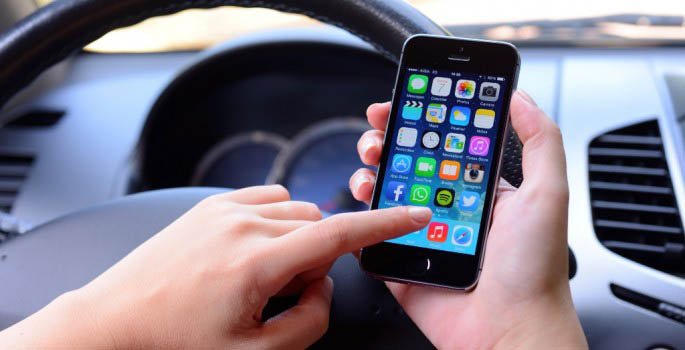
Texting while driving and other cell phone use while driving facts and statistics show that this multitasking behind the wheel is becoming a life-threatening norm. Talking or texting while driving or checking or sending social media posts takes eyes and brains off the task of driving. Coupled with inexperience and lack of driving skills, cell phone use can be especially deadly for teen drivers.
Because technology will change and new distractions will be introduced, parents need to make sure teens understand the value of engaged driving, where the driver is continuously attentive and focused. Make a family commitment not to use distracting devices while driving.
Solution
- Complete any call or text before starting the car
- Get directions and try to visualize the destination before turning the key
- Check in with friends or parents only after arrival
Parents should also avoid calling their teen when he or she is driving. Instead ask to be called before leaving one place and when arriving at the next destination. A teen may feel compelled to answer a parent's call if received while driving
It's also a good idea to set the default "do not disturb" setting on a teen's phone.