


Evidence shows that exposure to racial discrimination leads to poor health among racial/ethnic minority individuals (henceforth, minorities) in adolescence and throughout the lifespan. In the United States, racism is a cultural system of values, symbols, and institutions which claims White racial superiority and uses this assertion to subordinate minorities, which are considered inferior. Racial discrimination is the enactment of this cultural system in behaviors by Whites that harm minorities. Systematic reviews and meta-analyses provide support for the notion that racial discrimination is related to multiple forms of illness, including depressive symptoms, anxiety, post-traumatic stress disorder, hypertension, and diabetes. These negative health consequences may be exacerbated during adolescence, a developmental transition marked by enhanced socioemotional processing. Racial discrimination is especially harmful in countries such as the United States that have a pronounced history of racism.
Although America is by nature a country of immigrants, US anti-immigrant sentiment is deeply rooted in American history, and continues to the present day. Many white Americans of European, usually Protestant, descent, like to claim that theirs is the one true “American” culture. The reality, of course, paints the picture of a culture that is anything but homogenous. Native Americans lived on the land that is now the United States first, millions of Africans were brought to the US by force to be held in slavery, and people have been immigrating to the US from all around the world, not just western Europe, for centuries.

Unfortunately, wealth in this country is unequally distributed by race—and particularly between white and black1 households.2 African American families have a fraction of the wealth of white families, leaving them more economically insecure and with far fewer opportunities for economic mobility. As this report documents, even after considering positive factors such as increased education levels, African Americans have less wealth than whites. Less wealth translates into fewer opportunities for upward mobility and is compounded by lower income levels and fewer chances to build wealth or pass accumulated wealth down to future generations.
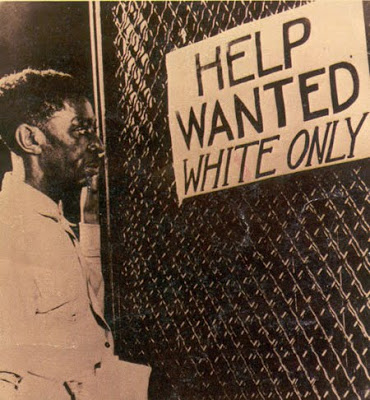
Many African Americans left the Jim Crow South as refugees of this terrorism and headed to northern cities as a part of the Great Migration. But the social and legal norms in these destinations would set the stage for violent confrontation. While many places had explicit segregationist laws, others operated under de facto segregation. Social codes and unwritten rules dictated, along racial lines, how people should act, who they could and could not engage with, and where they could live their lives.
All Asian immigrants faced prejudice, economic hardship, and social indignity. Those who came to the United States to work in mines, farms, and railroads accepted lower wages, which drew the ire of white residents. Asians became victims of riots and attacks. The 1882 Chinese Exclusion Act and the 1924 Asian Exclusion Act barred additional immigration and declared Asians ineligible for citizenship. Without citizenship, they could not own land.
In a moral sense, America is exceptionally ordinary at best. Its foundational document which claims to recognise the equality of all men (and not women) was written by and for slave owners who included a description of the local population they were exterminating as "merciless Indian Savages". It was not originally conceived as a means of liberation for all but for a privileged few who sought to recreate "a romanticised colonial past".
Better covered than the Plessy v. Ferguson decision that year, “Race Traits” catapulted this statistician into scientific celebrity. At the time of emancipation, blacks were “healthy in body and cheerful in mind,” Hoffman wrote. Thirty years later, the 1890 census forecasts their “gradual extinction,” due to natural immoralities and a propensity for diseases. He blazed the trail of racist ideas in American criminology when he concluded that higher black arrest rates indicated blacks committed more crimes.